
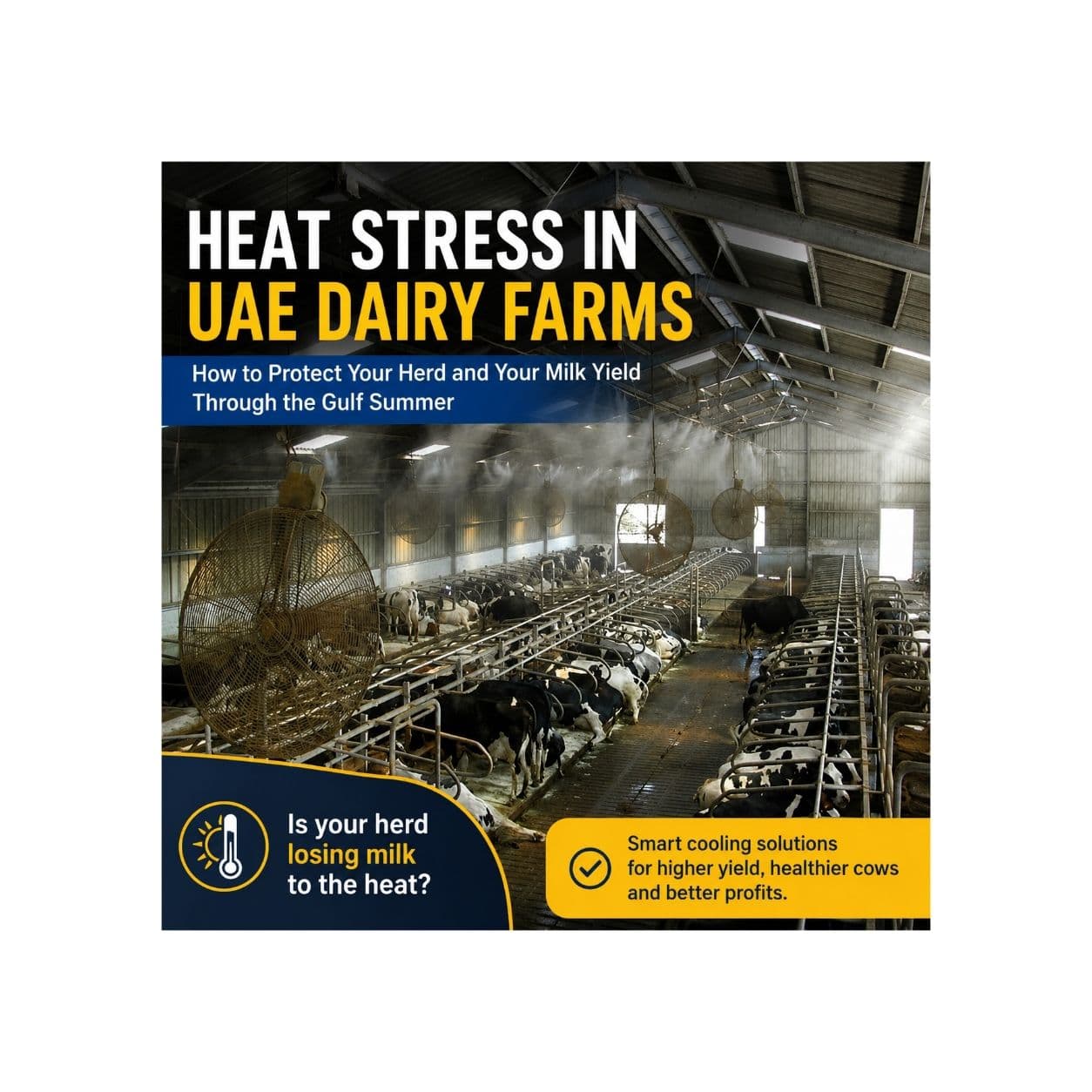
Heat Stress in UAE Dairy Farms
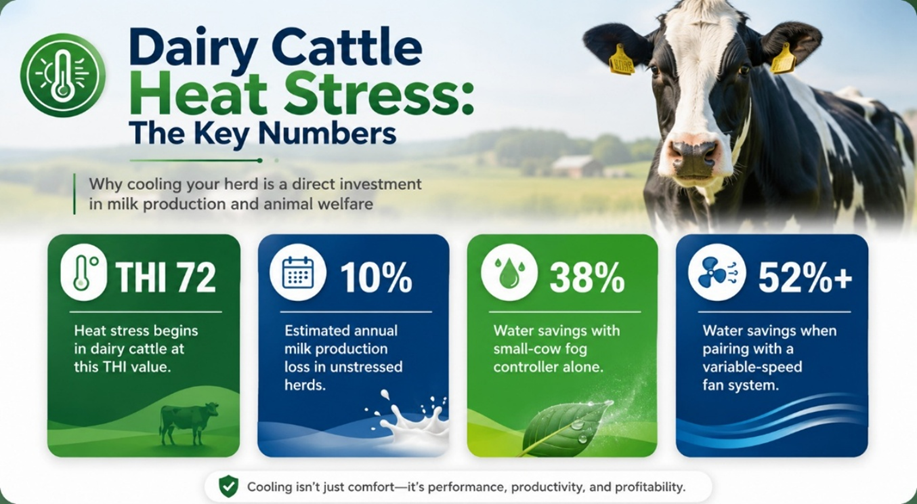
Heat stress costs UAE dairy farms more than just discomfort - it directly reduces milk yield, disrupts reproduction, and shortens productive herd life. When the Temperature-Humidity Index (THI) rises above 72, which happens routinely across the UAE from May to October, most intense June to September, cattle experience measurable physiological changes that affect performance well beyond the day itself. Studies show that properly cooled herds produce roughly 10% more milk annually than uncooled herds. The good news: modern cooling systems can dramatically reduce these losses - and smart controls can cut water consumption by up to 52% in the process.
What Heat Stress Does to Your Herd
When the Temperature-Humidity Index (THI) rises above 72, dairy cattle begin showing measurable signs of heat stress:
- Reduced feed intake: less digestion means less energy available for milk production.
- Elevated respiration rate: the animal works harder to shed heat, increasing fatigue.
- Higher water consumption: water demand rises sharply across the herd.
- Reproductive problems: hypofertility and embryo mortality increase during peak heat periods.
In the UAE, ambient temperatures above 40°C combined with humidity keep the THI well above 72 for weeks at a stretch - from coastal dairy operations around Abu Dhabi to inland farms near Al Ain. When heat events persist overnight without adequate cooling, animals never fully recover between cycles. The reproductive losses in particular carry into the next lactation, compounding the financial impact well beyond the summer months.
10% more milk estimated annual production gain in properly cooled herds versus uncooled herds
The Proven Solution: Fans and Low-Pressure Misting
The first intervention is always ventilation. Fans along feeding lanes and resting areas move warm, stagnant air away from the animals, helping the herd dissipate body heat naturally.
During peak UAE summer heat, ventilation alone is not enough. Low-pressure misting systems installed along the feeding rack and in the milking waiting room work together with the fans - water misted onto the animal's back evaporates quickly in dry Gulf air, bringing core temperature down rapidly. The combination of wet skin and moving air works faster and more effectively than either system alone.
Stainless steel pipework and brass nozzles are the correct specification for UAE conditions. Galvanised steel or plastic fittings corrode within a single season in the Gulf's combination of heat, humidity, and saline air. Getting the materials right at installation avoids costly replacements in year two or three.
Not sure if your current setup can cope with a Gulf summer? Book a farm assessment with our team.
Contact CHS for a farm assessment ->
Smart Controls: Less Water, Same Cooling Effect
Water is scarce in the UAE. A system that runs misting continuously wastes water and can over-wet bedding and feed. Smart controllers that activate misting based on live THI readings - and presence sensors that mist only where animals are actually standing - deliver measurable water savings without reducing cooling effectiveness.
According to comparative data from a May to October monitoring period on an 80-metre feeding rack, a smart THI-responsive controller alone reduces water consumption by 38%, with no loss of cooling performance. Add presence sensors that activate misting only in zones where animals are standing, and water savings rise to 52% or more - measured against a continuously running baseline. On a large operation, these figures represent a significant and ongoing reduction in annual water costs.
38% water saving with a smart THI-responsive controller - same cooling effect, no hardware changes
52%+ water saving when presence sensors are added to target only occupied areas of the feeding rack
Choosing the Right Animal Cooling System for a UAE Dairy Farm
Not all cooling systems are designed with UAE conditions in mind. When specifying or upgrading a system for a Gulf dairy farm, the following factors make the difference between a system that performs reliably for years and one that underdelivers from the first summer:
- Ambient temperature rating: the system and its components should be rated for sustained operation at 45-50°C. Standard European specifications are not adequate.
- Corrosion resistance: stainless steel pipework and brass or stainless fittings are non-negotiable. Galvanised or plastic fittings degrade quickly in the UAE heat and humidity combination.
- THI-responsive control: the controller should activate based on measured THI, not a fixed timer, to match actual conditions rather than a predicted schedule.
- Presence detection: sensor-based activation maximises water savings and ensures cooling is directed at animals, not empty spaces.
- Integration with ventilation: fan and misting systems that operate together under a single controller deliver better outcomes than separate systems managed independently.
CHS works with farm managers across the UAE to specify, supply, and install cooling systems that meet these requirements. We bring together the right equipment, the right materials, and the experience of working in Gulf conditions to deliver installations that perform reliably through the harshest months of the year.
Frequently Asked Questions
At what temperature do dairy cows start showing heat stress?
Dairy cattle begin experiencing heat stress when the Temperature-Humidity Index (THI) rises above 72. In UAE conditions, this threshold is typically crossed by mid-morning from May to October, most intense June to September and can remain elevated overnight during peak summer weeks, meaning animals may never fully recover between heat events.
How much milk yield is lost to heat stress?
The loss varies by severity and duration, but studies consistently show that farms without adequate cooling lose an estimated 10% of annual milk production compared to farms with well-managed cooling systems. In a prolonged Gulf summer, the cumulative effect across a full lactation cycle is substantial.
How much water can a smart misting system save?
Significant savings are achievable without any compromise to cooling performance. Data from a comparative study on an 80-metre feeding rack across a May to October period showed 38% water saving with a smart THI-responsive controller, rising to 52% or more when presence sensors were added - both measured against a continuously running system.
What is the best cooling setup for a UAE dairy farm?
The standard approach is axial fans combined with low-pressure misting along the feeding rack and in the milking waiting room, managed by a smart THI controller with presence sensors. The system should be specified in stainless steel and brass throughout for Gulf conditions. CHS can assess your farm layout, herd size, and water supply to recommend the right configuration.
Ready to Protect Your Herd This Summer?
The right time to install or upgrade a cooling system is before the summer heat arrives. CHS supplies and installs animal cooling systems across the UAE, using components specified for Gulf operating conditions. Get in touch to discuss your farm's requirements.
Schedule a farm assessment or discuss your cooling requirements with our team.
Contact CHS ->